No construction project ever runs smoothly. There’s always some obstacle or hurdle that comes out of nowhere and wreaks havoc with your timeline. Between logistics, safety concerns, and city ordinances, it’s a wonder any construction site gets built at all!
One issue that may not cross your mind until it’s downright annoying to fix is site definition and security: We’re talking about temporary fencing.
Site fencing should be one of the first things you think about when beginning development on any project. Whether you’re constructing a downtown high-rise or building a neighborhood row home, securing your perimeter should be at the forefront of your asset and public protection plan.
Does Your Construction Site Need Fencing?
As with any rule, there are always exceptions, but let’s start with a look at why you need temporary construction fencing.
First, take inventory of your surroundings. What are the potential risks if someone were to gain access to your build site? One of the best forms of construction site security is a physical barrier. It may not keep the most determined intruder out, but it’s hard to argue with prevention before it happens. Having some type of fenced-off work area also prevents accidental entry from curious onlookers.
Furthermore, it allows you to control the entrance and exit of workers and visitors. Knowing who is on site and when they’re there is a basic tenet of project management these days.
Having an area clearly defined as off-limits to the public also gives your projects a more professional look. Nobody wants to invest in a building surrounded by “Keep Out” tape. Your investors and future tenants want to see a tall fence that shows you care about safety and keeping your jobsite secure.
Is Construction Site Fencing Required in Texas?
Not generally, but you should check with your city or municipality. The United States has no federal standards for perimeter safety barriers around construction sites. OSHA does an excellent job at providing safety guidelines, but leaves things open-ended when discussing actual fence requirements.
Every city in Texas has a unique set of fencing requirements that are detailed in its municipal code. Generally, if you have any excavation work that exceeds 4 feet in depth, you will be required to fence it off. The same can be said for pedestrian traffic. If there is a sidewalk within 50 feet of your property line, you will most likely need to contain your work area.
Many cities in Texas will require you to include a fencing plan with your building permit application. Most fence codes call for a minimum height of six feet with sturdy posts that will not easily lean or fall over. Failure to comply with city codes can result in fines, work stoppages, or even liability should someone enter your property and get hurt. As with any city ordinance, it is always best to call your local building department and ask about the fence height and structural requirements for your zone.
Benefits of Temporary Construction Fence Rentals
Construction site temporary fencing provides you with three layers of protection.
Safety Concerns
The first and most obvious benefit is public safety. Construction sites are naturally hazardous to anyone not wearing a hard hat. Sheetrock, falling debris, extreme weather conditions, and heavy equipment operating in tight quarters are just a few of the things that can harm your unsuspecting neighbor. Install a sturdy temporary construction fence around the outside of your build site, and you greatly reduce your chances of a third-party injury lawsuit.
Liability and Insurance Rates
Insurance companies love it when you take the proper precautions to protect your jobsite from unauthorized entry. A simple construction fence can be the difference between a safe site and thousands of dollars in liability. If a stranger were to stumble into your property and become injured, you’ll have something tangible to point to that shows you didn’t allow free access.
Theft Deterrent
Equipment and materials cost you money — a lot of money! Think about all of the copper piping, 2×4’s, and power tools lying around your sites. These are like candy to thieves looking to sell scraps on the black market. The best way to protect your tools and building materials is by installing a temporary construction fence. If someone can’t easily get in AND out of your property, they will move on to an easier target. Add some privacy screening to your fence, and you hide all of the “good stuff” from view as well.
What are the Best Types of Temporary Fencing Construction?
Material will vary depending on how long you need the fence and the environment you’ll be working in. There really is no definitive answer to what type of temporary construction fence is best, but we’ve found these to be some of the most popular (and effective) fencing options throughout Texas.
Chain Link Panels
You’ve seen them everywhere; simple chain link fence panels are ubiquitous temporary construction fencing. Chain link is perfect for projects that need a fence but still want visibility for security patrols. Most panels come in 6 or 8-foot sizes and sit on weighted feet or are hung in concrete. These fences are great because you can see through them, but they still provide a physical barrier to entry.
Privacy Fence/Wind Screen
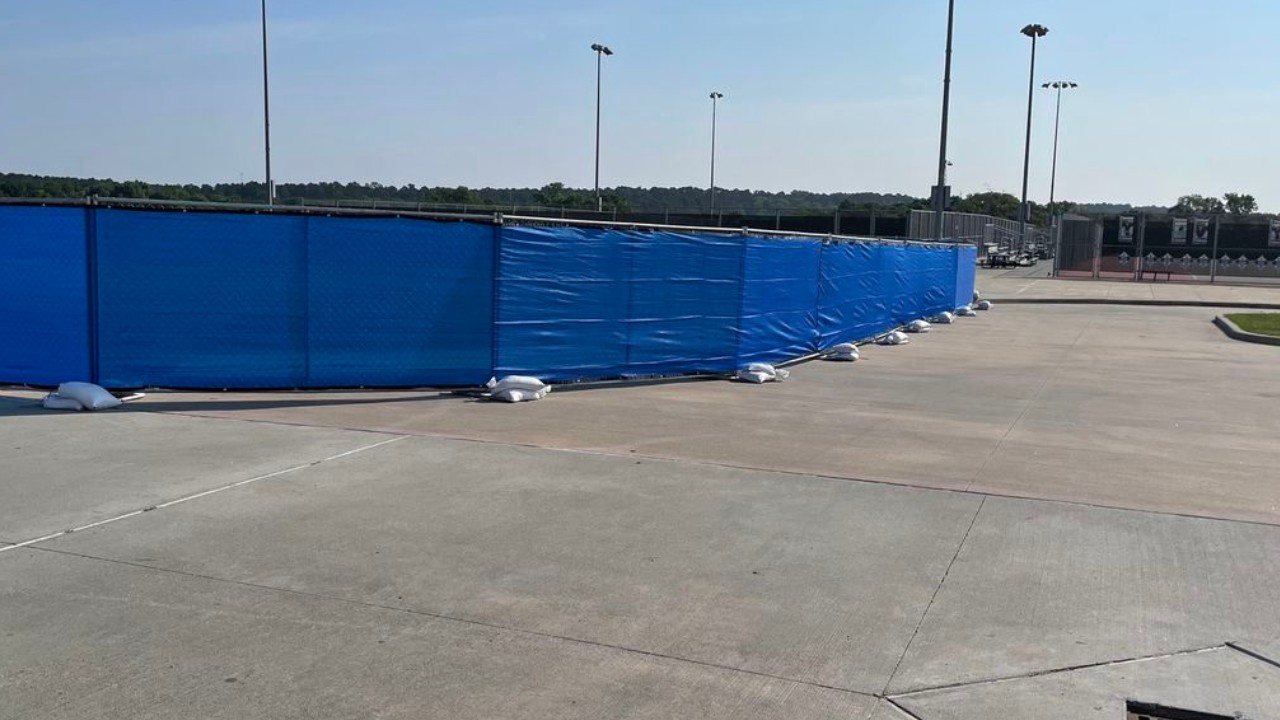
High-wind areas and dust mitigation often require some type of mesh screening be added to chain link fences. This also creates privacy from passersby, which can be beneficial when building in residential neighborhoods. Privacy fencing is great for creating a “curtain” around your jobsite to reduce visual noise.
Barricades and Pedestrian Control
As their name implies, these are best used when trying to guide foot traffic. You’ll often see these around roadwork sites or smaller excavation jobs. They can be linked together to create passages for pedestrians to travel through.
Most barricades are light enough to be moved around quickly if your access points need to change.
When to Install Temporary Construction Fencing
You should install temporary fencing as soon as your build site is secure and you’re ready to start work. Setting the perimeter at the beginning of your project ensures that you have a “clean zone” to work within. If you wait too long to fence in your construction site, you open yourself up to all sorts of problems. Nobody wants to jump through hoops to get permits so you can put up a fence around your materials.
Phases of Construction that Require Extra Attention
Although your fence should remain intact for the entire duration of the project, there are times during construction when you should pay extra attention to your fence. If you’re demo-ing an existing structure, pay close attention to debris falling beyond the property line. Excavating while cranes are on site is another time you should scrutinize fence stability. During these high-risk periods, it wouldn’t hurt to inspect your fence daily.
Urban construction sites or sites with heavy foot traffic will need to pay special attention to how the fence relates to pedestrian access. Many cities require a certain distance of clearance between the fence and sidewalk. Try not to encroach on the public walkway or you could be subjected to citations by your local code enforcement.
Tips for Maintaining Security Fence Integrity
Here are a few helpful tips to make sure your temporary construction fence lasts the duration of your project.
- Do a daily walk-through to inspect fence stability. Look for kicked-over panels or large gaps that someone could fit through.
- Lock all gates at the end of each shift, and limit gate keys to management-level employees.
- Ensure fencing won’t blow over in high-wind events. Here in North Texas, we get our fair share of wind…a lot of wind. Wind can catch privacy fencing like a sailboat and cause panels to “tip”. Use sandbags or ground anchors to keep your fence upright.
- Don’t forget to use your fence to hang safety signs. A big “Hard Hat Area” or “No Trespassing” sign can deter would-be criminals and clarify your site rules.
Call Texas Johns, Your Job Site Logistics Partner
Running a safe and compliant construction site takes a team effort. Here at Texas Johns, we are the team member who has your back. We will work with you to design a fence configuration that fits your budget and safety needs. We have the experience and knowledge to help you understand OSHA guidelines and exceed TCEQ expectations.
We service the Dallas–Fort Worth Metroplex, Austin, Houston, and San Antonio with temporary construction fence rentals. Give Texas Johns a call today, and we’ll start customizing your construction site.