When servicing a job site or planning for an outdoor event, there are dozens of details to manage. Proper sanitation is one of those aspects that is non-negotiable. Workers and guests expect access to clean restrooms, and local regulators require it.
Knowing how often portable toilets need pumping is important for long-term rentals and special event planning.
How Often Should Portable Restrooms Be Pumped?
Portable restrooms should be pumped once a week when used by 10 average workers over the course of a typical 40-hour work week.
Weekly pumping is standard for both commercial job sites and long-term construction rentals. This schedule allows pumping companies to keep the holding tank from reaching capacity, sanitize all interior surfaces, restock toilet paper, and refill hand sanitizer.
Once occupancy increases or extenuating circumstances are present, portable toilets should be pumped more frequently.
Job sites with high worker traffic, night shifts, or locations with weekend usage may need to increase servicing frequency to bi-weekly or even twice per week.
What Variables Change Portable Toilet Pumping Frequency?
How many employees have access to the unit? How many hours per day will it be used? How hot will it get outside? How long will it be installed? These are questions that determine how often your portable toilets should be pumped.
Take staffing levels as an example: more employees equal more toilet breaks.
- If a portable toilet is servicing 20 employees, it will fill up twice as quickly as one that’s being used by 10 employees. To maintain a clean restroom, you should pump twice a week instead of weekly.
- Warm temperatures increase bacterial breakdown of waste, which can produce stronger-smelling ammonia and methane gases. Warm temperatures also degrade the chemical faster. You may need to pump out portable toilets more often during the summer months to keep odors in check.
- If your event or job site is serving food or water (or selling alcohol), expect higher restroom traffic per hour than if there are no concessions.
- Work sites with more women or an even mix of men and women will typically require more toilets or more frequent paper goods restocking.
How Do You Know If Your Portable Toilet Needs Pumping Sooner?
If the wastewater is approaching the top of the tank, it starts to smell inside when the vent pipe is clear, or if you notice that you’re running low on supplies before your next scheduled service – it’s time to get that portable toilet pumped.
An overflowing portable toilet is a serious health code violation that will stop work until the problem is corrected. Here are a few indicators that your portable toilet needs serviced immediately.
- Tank is ¾ full. If the liquid waste has reached about three-quarters of the tank’s total capacity, it’s time to call for a pump-out.
- Unit has an odor. If the smell inside the unit doesn’t clear after you open the vent pipe, the chemical has worn off — time for a pump-out.
- Running low on supplies. If your hand sanitizer wells and paper rolls are emptying before your next service visit, you may need to pump more frequently.
- Flies. If you see flies around the toilet seat or outside of the vent pipe, it’s time to get that portable toilet pumped.
Construction Site Rentals vs. Event Portable Toilet Service
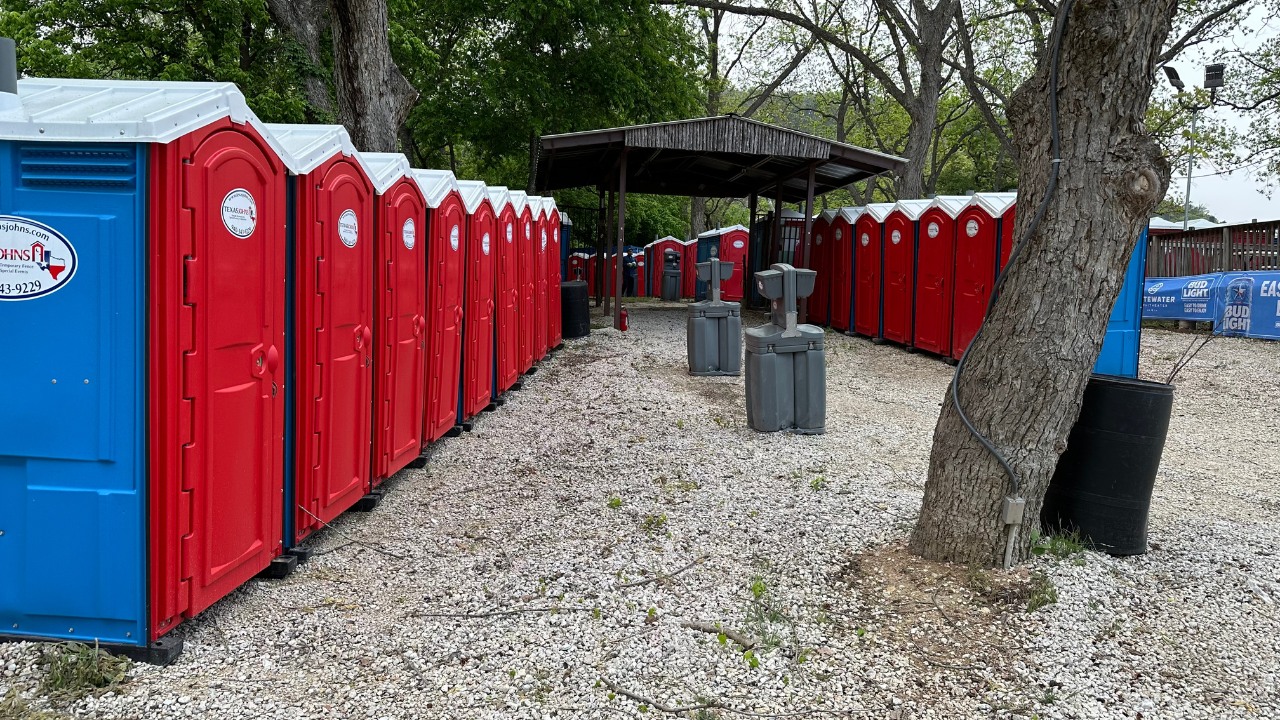
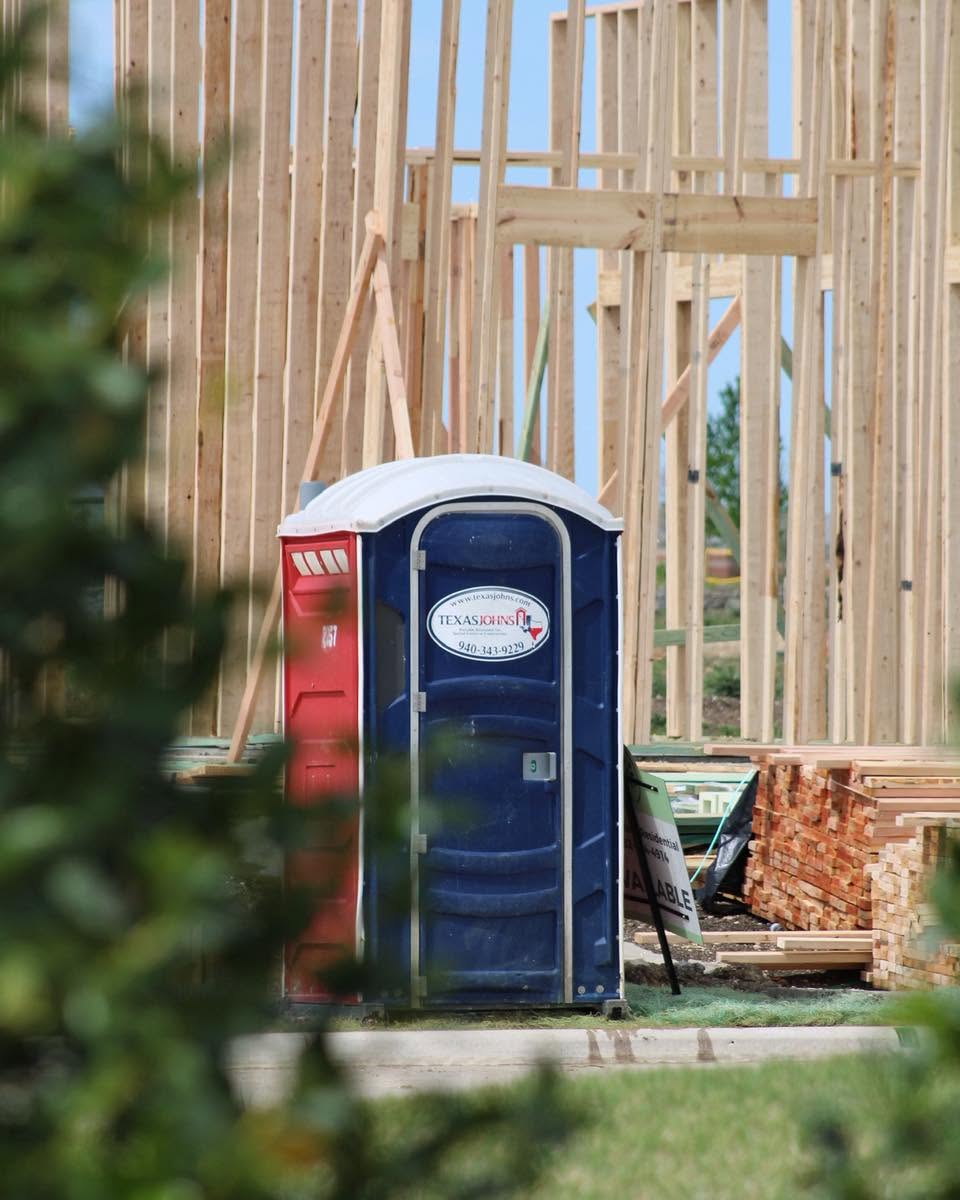
Commercial job sites are an example of low-occupancy, long-term rentals. Service professionals make weekly visits to the same location for months or years at a time.
Event portable toilets are rented for just a few days, and usage is determined by the size and timing of your crowd.
| Rental Type | Typical Rental Duration | Average Usage | Recommended Pumping Schedule |
| Construction Site | Months to years | 8-10 workers | Once weekly |
| High-Rise Development | Months to years | 15-20 workers | Twice weekly |
| Single Day Event | 8-12 hours | 75-100 people | After event (or twice for events over 12 hours) |
| Multi-Day Event | 3-5 days | 100+ people per day | Daily (overnight pump-outs) |
Job sites rely on predictable schedules, while special events must calculate their peak usage times. Learn more about planning for large crowds in our guide to portable toilet servicing for special events.
What Happens When You Pump a Portable Toilet?
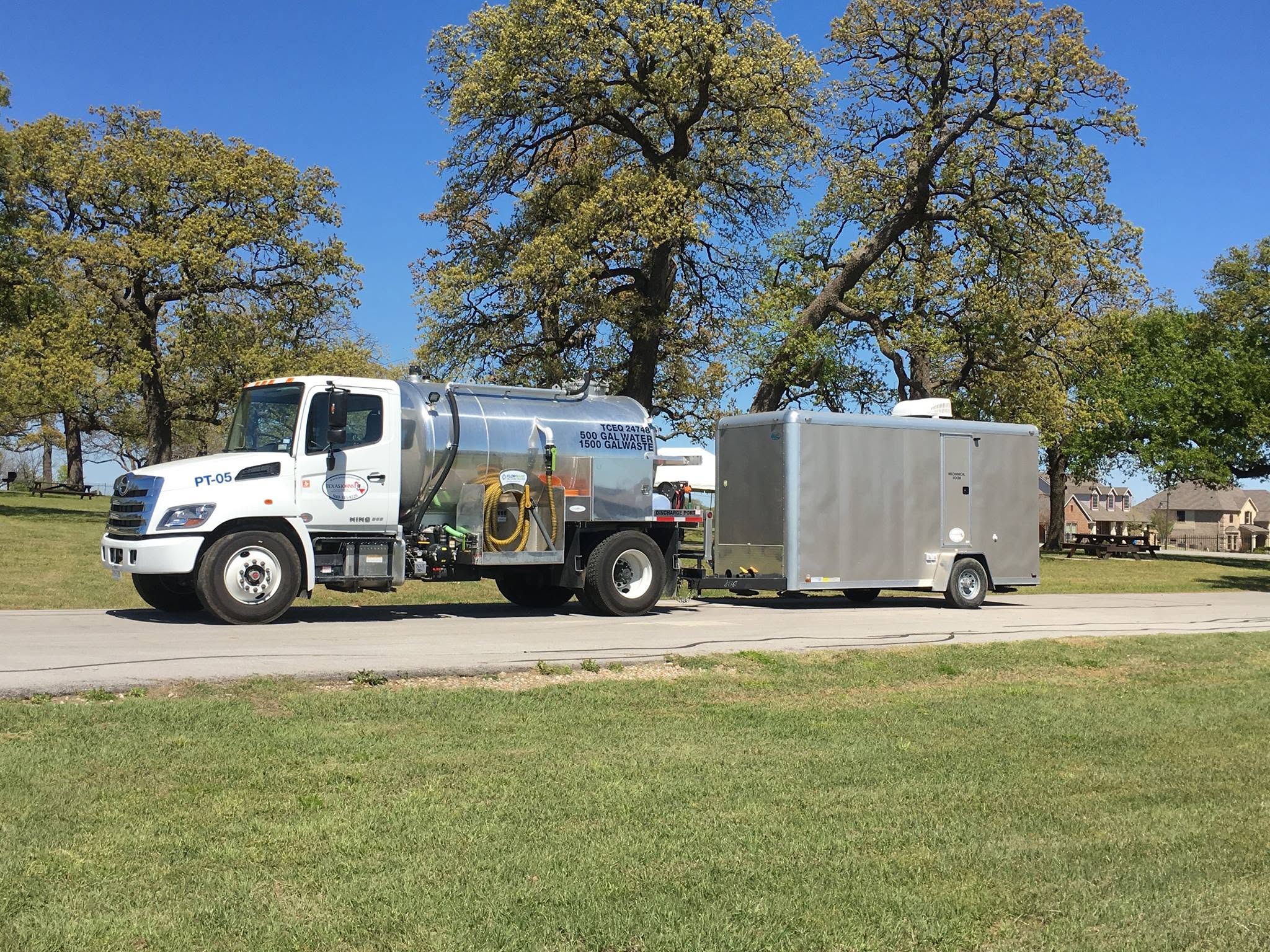
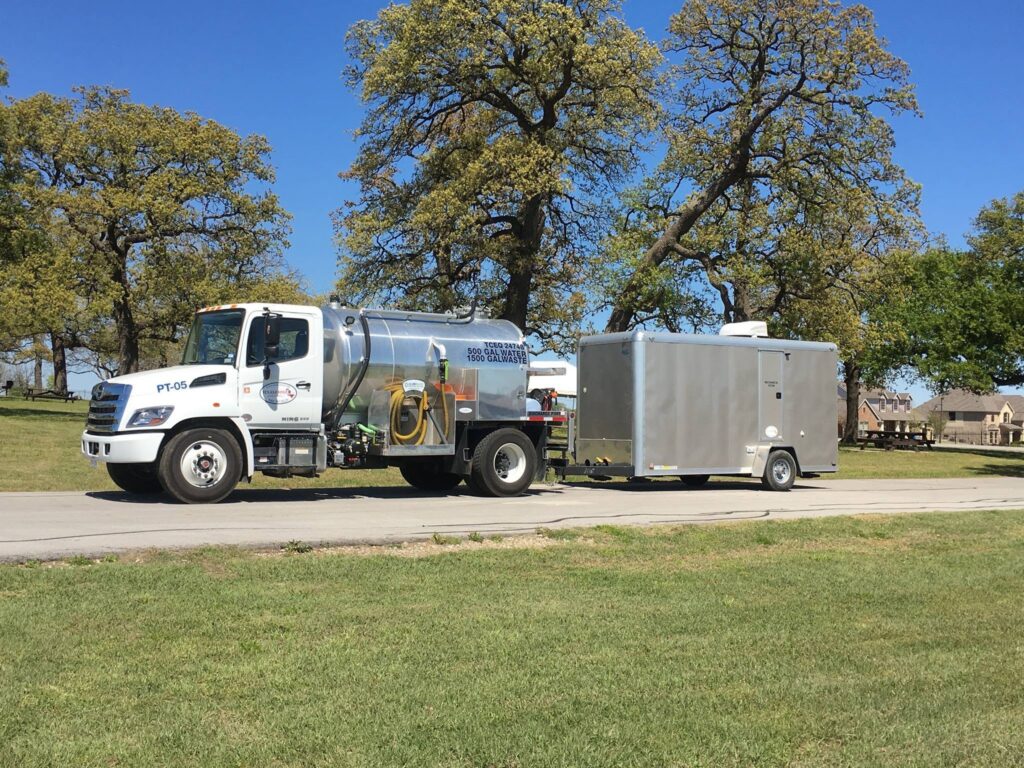
Portable toilet service companies pump out the tank, scrub the inside of the unit, and recharge the chemical waste treatment before restocking your unit with toilet paper, hand sanitizer, and soap.
Pumping a portable toilet isn’t as simple as removing liquid waste. Your service provider should follow these steps every time they service your portable toilet.
- Pump-Out. A service technician will connect a vacuum hose to your holding tank. The liquid waste is pumped out of your portable toilet and into the sealed tank of their service truck.
- Clean & Sanitize. The technician sprays down the entire interior of the porta potty, including the seat, urinal/bowl, door latch, and walls, with an industrial-strength sanitizer. Then they wipe down everything they sprayed.
- Chemical Recharge. Pumping companies will add blue chemical and water to the tank to properly treat waste that accumulates until the next service visit.
- Restocking. Your service technician will fill up your toilet paper roll, hand sanitizer dispenser, and soap dispenser before they leave.
Do You Need More Portable Toilet Service?
Your portable toilets may need servicing more frequently.
- Has the size of your crew increased since your original order?
- Are workers completing 10- or 12-hour shifts instead of 8-hour days?
- Are outdoor temperatures regularly above 85 degrees Fahrenheit?
- Do workers complain about long lines or missing supplies?
If you answered “yes” to two or more questions, you should increase your portable toilet service frequency.
Increasing your portable toilet service schedule will help you avoid messy spills that could damage site morale and violate OSHA sanitation rules.
Work With Texas Johns For Long-Term Site Efficiency
Partnering with a reliable pumping schedule allows you to work efficiently knowing where your next restroom break is coming from. Texas Johns builds service routes to meet the needs of your exact project schedule and workforce. Install standard porta potties in Dallas–Fort Worth, Houston, Austin, or San Antonio.
Texas Johns also specializes in premium portable restrooms for events and corporate picnics. From luxury trailers to handwashing stations, our team can customize a rental that fits your needs.
Manage the cleanup and leave the facilities to us. Contact Texas Johns today to design a custom portable toilet service schedule for your worksite or event.
Frequently Asked Questions
How often do construction sites need portable toilets pumped?
A construction site should have at least one portable toilet for every 20 workers on site. We recommend pumping once per week for maximum sanitation. If you want to keep working conditions as clean as possible, we suggest servicing your portable toilets once a week for every 10 workers on site. For job sites with more than 20 employees or sites where workers do 12-hour shifts, consider pumping twice per week.
Can I pay for extra portable toilet service if needed?
Yes, additional pump-outs can be scheduled as needed. If your crew grows, or your event gets extended, schedule an additional vacuum truck to stop by for an off-hours pump-out. Contact your vendor ahead of time to make sure they can accommodate your logistics during your busiest hours.
Why do portable toilets smell worse when it’s hot out?
Heat causes bacteria to break down waste faster. This can produce ammonia and methane gases quicker than usual. Hot temperatures also cause your breakdown chemicals to degrade faster. By servicing your portable toilets more frequently, you can beat the smell and replace your chemical faster.